Roof Shingles & Copper Strips

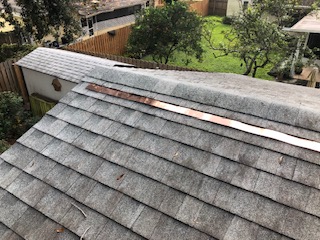
In late 2018 I noticed discoloration on my 4-year old shingle roof in Florida. The area affected was in the shade of trees most of the day. I did some research online and discovered that black algae and moss tend to grow on shaded and damp areas of the roof. There were a number of cleaning kits recommended, but I was looking for a more permanent solution. I came across some articles that described the use of copper or zinc strips near the top of the roof line. The theory was that rain water would wash the copper or zinc salts down the roof and this would protect the roof from discoloration due to algae or moss formation. In addition to the theory behind the solution, there were some case histories to back it up. However, reader comments (presumably from those who tried the solution) were somewhat mixed. Some had success with it and some did not. The mixed results may have been due to different locations and environments. I decided to give it a try and purchased some sheets of copper plate which I tucked and attached under the top line of shingles. (see picture below)

IMG_0441

I took some pictures of the problem on the day I attached the copper strips and then again three months later. You can see the results below.

Here is a picture taken just after I installed the copper strip at the end of November 2018 You can notice the ugly discoloration on the shingles.

IMG_0439

The picture below is of the same area taken in mid February 2019. I was hoping that the strips would prevent further discoloration but was pleasantly surprised to notice a marked improvement in the area. It does appear that the metal salt wash after rainfall, not only inhibits but kills standing agae/moss growth.

IMG_0632

I shall take more pictures of the roof in a years time and update this post  to confirm the long term efficacy of the solution – at least in my area of sunny and rainy Florida.

Some Work Advice

I shall define work as a service rendered in exchange for a determined remuneration. For most of us this would describe the work we do or the job attached to a career. For some situations, it applies to volunteerism where the “remuneration” is non-monetary . The advice below has the best interests of both the worker and the employer at heart.

1. Negotiate your remuneration at the start of the relationship and accept what you settle for. Be satisfied with what you negotiated for, even if you discover that others are getting more than you. The time to remedy that is at the end of the year or contract period. If you do not like the result of the negotiation, either accept it or make plans for a change. In any case, do not let the outcome impact your work or your attitude towards the company. A negative attitude or behavior will always hurt you rather than the company.

2. Always go the extra mile. This means, do what is expected of you and a little more. Develop the habit to learn and find ways to improve the quality of your service, even if your work situation is not the best. You are then continuing to help yourself as well as your employer. Do not watch the clock and/or shortchange your employer. You can still balance your life while making sure you give your employer his or her due. If you find you are unable to motivate yourself to offer your best, it is time to move on, but continue to contribute and be positive.

3. Never gossip in the workplace. If you are unable to say something to someone to their face, do not relate it to anyone else. You can be sure that anyone who gossips about someone else is doing the same about you behind your back. Before you share any news, make sure it passes this three question test: is it true? is it kind? is it necessary? If you disagree with something and feel strongly about it, say it in private to the person involved. They may not initially like it, but you will gain their respect and trust in the long run.

4. Whenever possible, associate yourself with work that adds value to people’s lives and the environment. This kind of work has a built in satisfaction that will improve your well being. However, all honest work is dignified and can be viewed through the lenses of meaning and contribution.

5. Treat everyone in the workplace with respect. Avoid cliques. Treat even the “lowest” level employee kindly and be present to them whenever your paths cross.

6. Be helpful whenever you believe someone needs it, even if it is outside your job description.

7. Each morning before going to work, be appreciative and thankful for the ability and opportunity to do the work you do.

A Robot Will Not Buy Anything

More than 40 years ago when I was reading some books on economics, I came across the following sentence (paraphrased as I do not recall the author): “a robot will not buy anything.” This was in the 1980’s when technology was beginning to make strides in society. Naysayers and negative predictions about technology were silenced by quoting Joseph Schumpeter’s idea that capitalism and new ideas will replace the old, and therefore new technologies will replace old technologies which will continuously improve prosperity. However, that one statement, “a robot will not buy anything,” stuck with me as it struck at the core of economic theory where consumption is key.

Over the years, we have seen technology take over our lives, but the inevitable disruption appeared to be manageable. However, as increased technological change starts displacing more jobs, it behoves us to revisit that statement and the necessary economic and political changes that may need to be considered. Technological improvements are a good thing but their consequences need to be carefully considered and managed. The following is a simple, but by no means simplistic examination of the saying, “a robot will not buy anything.”.

So, “a robot would not buy anything”:  In the short term, robots will continue to keep producing things for the consumer market. Production efficiencies will be realized and profits will increase. But, consumers will need work to derive income that will allow them to continue to be consumers. When they are no longer able to consume, the particular market for that product will shrink and new markets need to be discovered to maintain consumption and profits. Wealth will be concentrated in the hands of the robot owners, who will use their wealth to improve their lot by lobbying legislation to promote their cause for labor regulations and access to markets. Over the long term however, as technology impacts other markets, the consumer market as a whole will shrink.  Let’s take this scenario to its logical conclusion. Rapid unmanaged technological change will cause massive disruptions in jobs and markets. As robots increase and human producers and human consumers decrease, the economy as we currently know it must necessarily evolve or implode.

We need to seriously look at managing the disruptions that technology is causing and going to cause. People whose jobs are being displaced by technology will need alternative forms of income, not only to survive, but to continue to be part of the economic consumption formula. So, terms like Universal Health Care, and, Universal Basic Income are not socialist ideas, but universal ones that are very timely and much needed for the survival of American society as we currently know it.

Our politicians are not going to help us as long as we keeping sending self serving and unthinking people to congress who can be readily influenced and/or bought by lobbyists. On the subject of technology, you only need to have listened to the questions posed to Facebook’s Mark Zuckerberg when he appeared before congress, to understand how clueless some of our legislators are about technology. They are not going to appreciate the import of the massive disruptions technology will cause us. We need our representatives in government to be honest and ethical, knowledgeable, continuous learners open to new ideas and learning, and committed first and foremost to the betterment of human capital in an economic society.

Since my retirement, my interest in the sentence “a robot will not buy anything” in the context of our current economy, has reoccupied my thinking. I hope to spend some time learning about and sharing some of the problems, ideas and possible solutions that surround this issue. One book on the issue that I am currently reading, that may be promising, is Andrew Yang’s “The War on Normal People.”

Faith & Doubt

Faith by definition is the belief in what cannot be known. So yes, there have been doubts at many different times in my faith journey. I would say that anyone who has not doubted, has not deepened their faith and may have a shallow and fragile faith. In my personal experience, doubt and a questioning faith, over the years, have helped my faith grow.

There are times when different Faith traditions try  to “protect against false teaching” by banning certain books or ideas. I find that difficult to understand or accept. Anyone who is a true seeker of the truth will have to face challenges and competing and contradictory ideas. God created us with the ability to reason and although I believe our reasoning is only capable of accessing a fraction of the mystery of God, it is honest and discerning reasoning working together with Faith, that leads us closer to God. When we have reached an impasse, when reason, by its very limited nature is unable to traverse, that’s when Faith comes in – “to touch the face” of what cannot be reasonably known.

I believe that religious teachings are the result of honest study by the many seekers of truth over the years, to provide an understanding of God. As such, they contain the wisdom of the ages and should not be dismissed lightly. However, it does not mean that they cannot be questioned and their underpinning reasons examined. The various teachings of different traditions help their adherents walk closer with God. God, I believe, has revealed himself to all traditions and different traditions have used different symbols and interpretations to explain their “truths.”

Problems arise when one or more traditions claim to be the true mouthpiece of God. I have been fortunate to grow up and live among many faith traditions. I have discovered that there is a common core to all religions that transcend all the different teachings. All the main traditions at their core, teach some form of the Golden Rule – “Do unto others as you would have done unto you”, or, “Do not do unto others what you do not wish done unto you.” No matter what the different traditions teach, Love and Compassion are at their core. Despite this core, there have been wars and mass killings done in the name of religion. This is because the tenets of different religions can be interpreted and used, purposely or inadvertently, to blindly lead the unthinking.

I’ll end by stating that I believe Faith is important. It helps you to fully know and examine yourself and to continually become a better person. It is both a communal and personal commitment and its very nature is revealed in your person. If you are becoming a more loving and compassionate person as a result of your Faith, it is doing what it was meant to do – bring you closer to Truth and God. If your Faith is causing you to harm or cause pain to others, you should certainly question teachings that are causing those actions. That is a first and good reason to have doubts about the teachings of your Faith.

Retirement and Investment Made Simple

It was only later in life that I embraced a simpler approach for my investments. Over the years I have, at different times, been attracted to stock  market timing, stock picking, penny stock investing, real estate, gold, and other “investment” fads that caught my fancy. I found index funds and buy and hold strategies kind of boring. However, the only thing boring were my returns which were dismal and at times a losing proposition. I would say that it was only in my fifties that I adopted those “boring” strategies and as a result was able to build a reasonable and dependable retirement income source.

So, here are some personal investment beliefs based on lessons learned.

Whenever I am drawn to the adventure of “playing” the stock market, personally researching and identifying winners, or timing the market, I set aside some “gambling” money – no more than 5% of my portfolio – for this purpose. I treat this amount really as Vegas money – money I am prepared to lose. I then speculate to my heart’s content. I have discovered that it really is a crap shoot, but have some fun along the way.

I have enough “safe cash” to cover two year’s of expenses beyond what I receive from social security, retirement or annuity payouts. “Safe cash” is distributed in a bank savings account, money market fund, and laddered certificates of deposits.

For longer time horizons, I invest in two index funds  – a total market stock fund and a total market bond fund. These funds have very low expense ratios and are available as mutual funds or ETFs (Exchange traded funds). These are allocated according to age and personal and market situations.

A dollar saved and invested today is worth much more in the future (future value of money). The only discretionary spending I do not regret is the money I spent on my travels, education or on wealth creation. The numerous other things and faddish gadgets I bought are now forgotten, mothballed, damaged or lost.

I do have a retirement budget which I keep track of once a week. I use only one or at most two credit cards for all my expenses which makes for easy and convenient record keeping and retrieval.

The Shoes on the Danube Bank

If you walk along the river wall of the Danube Promenade on the Pest side of the river in Budapest towards the old Hungarian Parliament building, you will take in the visage of old buildings, new hotels, restaurants and shops.  You will eventually come across a strange site – a sculpture in iron of 60 pairs of period shoes placed along the top of the river wall. Cast iron signs on a bench describe the sculpture thus: “To the memory of the victims shot into the Danube by Arrow Cross militiamen in 1944–45. Erected 16 April 2005.”

The sculpture by Gyula Pauer was the idea of the film director Can Togay. It was erected in honor of the people who were killed by Arrow Cross militiamen in Budapest during World War II. The victims were ordered to take off their shoes before they were shot at the river’s edge so that their bodies would then drop into the river and taken away. The sculpture is a memorial to the 3,500 people, 800 of them Jews, who were shot into the Danube. It is a striking and poignant reminder of human cruelty.

The Arrow Cross party was a far right party led by Ferenc Szalasi who formed the Hungarian government from October 15, 1944 to March 28, 1945. The Arrow Cross movement subscribed to the Nazi ideology of “master races.”

IMG_0125

This monument was a reminder to me that there will always be groups among us who see themselves ordained more superior and justified than others. The more extreme of these groups take their beliefs as a license to minimize, dehumanize and even destroy those that do not “belong.”

John Maynard Keynes

John Maynard Keynes (1883 -1946) studied Politics and Economics at Cambridge university in England. He rose to prominence prior to World War 1 and his major contributions to economics arose out of his analysis of the economic depression of the 1930’s. He published The General Theory of Employment, Interest and Money in 1936.

Keynes ideas were focussed on macroeconomic theory. Macroeconomics looks at the economy as a whole. Macroeconomic policies allow the government the  ability to stabilize markets through changes in government spending (fiscal policy) and the money supply and interest rates (monetary policy) in an economy. For example if the economy is sluggish, the government may decide to stimulate the economy by creating jobs through government projects and infrastructure improvement (fiscal) as well as increase the more supply by lowering interest rates as well as buying government bonds (monetary). Conversely if the economy is growing too fast and causing high inflation, it may reduce government spending and increase interest rates and sell bonds to reduce the money supply.

Keynes was not against Capitalism. He saw and appreciated the benefits of Capitalism. He wanted above all to ensure that these benefits be shared as widely as possible. His ideas gained popularity after the Great Depression. Keynesian intervention is meant to ameliorate the human impact of unhealthy inflation and unemployment during the economic cycle.

Hobbies

I have always enjoyed working with my hands, from making model airplanes as a young boy to tinkering with tools as I got older. In 2017, while still a school administrator, I enrolled in part-time home improvement and electrician courses in the evenings at the local technical college, anticipating that these skills could well save me some money in retirement. I expected to see a lot of young people in these courses, and was pleasantly surprised to find quite a few “older” students. The practical courses were very enjoyable. One of my course mates, a retired naval aviator remarked that if he were younger, he would have loved to do more training and start a second career as an electrician. I understood and shared his sentiments, but saw it as an avenue in retirement to work on my own home and as a hobby.

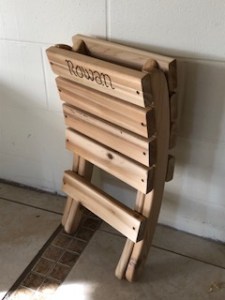
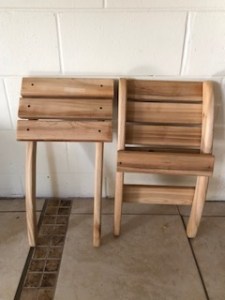
Prior to taking these courses I also dabbled in woodworking and have continued to do so. I make simple portable cedar chairs. I started making one each for the grandchildren and now build for others on request.

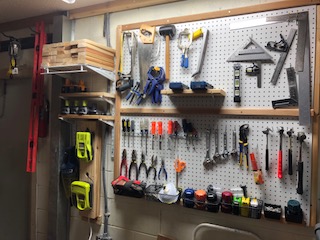
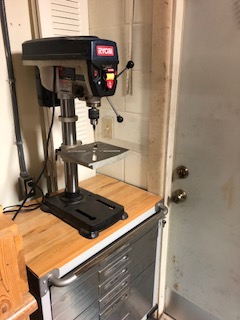
I have collected a number of tools over the years, some more useful that others. I have organized a small space in the garage for my hobby.  It was not always this tidy, the current pics being the result of time available during retirement.

tools1miterdrill

These are the chairs I make. They are strong and practical and come in two sections that slide together and apart for use, storage and transportation.

chair2chair1chair3

I am by no means a master or expert woodworker.  I am still learning and find it an enjoyable and satisfying  hobby.

Karl Marx

Karl Marx (1818 0 1883) was born in Prussia, present day Germany. He studied law and philosophy but his ideas were considered too radical for a profession as a university professor. One of the pivotal moments of his life was when he defended peasants who took wood from their landlord’s estate to keep warm during the winter. The peasants were prosecuted for theft and Marx defended them in the newspaper he was writing for. He lost his job for his efforts, but this story would stay with him as he studied economics in England.

The word term “capitalism” was first coined by Marx in his book Das Kapital to describe the free market system. Marx proposed that the key motivating force of capitalism was the exploitation of labor. As owners get richer and workers get poorer, Marx predicted that capitalism, which he viewed as unsustainable, would collapse under the weight of its own contradictions.

Marx explained that because profits mainly revert to the owners as markets develop, some would become richer than others and own more of the productive machinery. Everyone else would have try and  to sell their labor. As workers compete against one another for fewer jobs, they will see their wages decline. To protect against this, workers need to organize themselves into trade unions and align themselves with political parties that support labor interests. Marx predicted that eventually labor organizations would become strong enough to overthrow capitalism and establish social control of industry.

Social control of industry meant that all economic production would be centrally planned and based on the real needs of society.

Marx’s Socialism however did not account for the role that material incentives played in human behavior, and that greed and abuse of power by the few party planners could lead to major economic dysfunction. This was eventually recognized  in the failed extreme communist socialist countries like the Soviet Union and China,

An Early and Memorable Holiday in 1975

I am fortunate to have travelled extensively, but my favorite has to be my first “round-the -world” trip from December 1975 through early January 1976. I had never travelled outside of Malaysia and Singapore and this was my first overseas trip. Rhonda and I were only recently married and my company was sending me to New York for an orientation/training visit prior to our posting to the Philippines. They provided us with a “round-the-world” airfare (which you could get at a reasonable price in those days). The trip took us from Kuala Lumpur to Manila, then to the United States, before returning to Kuala Lumpur via London, Rome and Delhi. I’ll spend some time on each of the places we visited. It was a fantastic adventure filled with memorable experiences packed into six exciting weeks.

Manila, Philippines

We were met at Manila airport by my future colleague Nono who took us to meet the owner of the distributorship. I was recently appointed as the New York manufacturer’s representative and regional manager for the Philippines and was to move there in the New Year. The owners of the distributorship hosted us in their beautiful home and we had a taste of the local cuisine and the very friendly people of the Philippines. Although it was a short two day visit, I felt very much at home in Manila. The local restaurants, music and people left me looking forward to our new posting.

The USA (California, New York, South Dakota, Iowa)

We flew from Manila to Honolulu for an overnight beach stop on Waikiki before flying to Los Angeles where we were met at the airport by my uncle John and his wife Mary. We went straight from the airport to a great Mexican restaurant where we had our “best” Mexican meal accompanied by double margaritas in oversized glasses! During our stay with John and Mary, we toured LA and Hollywood and Mary got us complimentary tickets to Disneyland. We had a lovely time with them at their home in Glendale before we took the short flight from LA to San Diego where we were met by my uncle Rene. My uncle and aunt had moved their family to San Diego from Malaysia a few years ago and we spent time reminiscing and catching up with our many cousins. We visited the family restaurant “East of India” and the San Diego zoo and Sea World. From San Diego, Rhonda flew to South Dakota to her parent’s home while I flew to New York for my work orientation.

When I landed on Saturday night at Idlewild airport (now Kennedy International) in NYC, I was met by the company president who informed me that they had me booked into a room at Burt Bacharach’s East Norwich Inn, which was close to the company facilities in Oyster Bay. He gave me the keys to a rental car (a very large Buick) and local maps and said he would see me at the office at 8:30 am on Monday morning. Now prior to that night, I had never driven a large automatic American car with power brakes, and never driven on US roads, let alone on the right side of the road. To cut a longer, but another interesting story short, I found my way to the inn and to the office on Monday. I was a fast learner and got comfortable in my overcoat driving in the December cold on the roads of Long Island. I was much more comfortable, four days later, when I learned that American cars had heaters that you switch on in cold weather!

After an informative and interesting visit and orientation at the company’s offices and factory, punctuated by a weekend visit to the city and Times Square, I flew to Huron, South Dakota to join Rhonda and her family for the Christmas holidays. Rhonda’s parents had a cheese plant in Wessington Springs, SD. It was enjoyable being with family and meeting Rhonda’s brothers. We toured and helped out in the cheese plant while enjoying a small town experience in my first real encounter with snow country!

From South Dakota we headed to Iowa and visited Rhonda’s Alma mater, Iowa State University. We spent some good days and evenings catching up with Rhonda’s college friends. I recall long drives across the flat state and visiting the Amana Colonies where I got my first wool shirt and hearty helpings of German inspired food.

London, England

The return journey began with a flight to London. We stayed at the Piccadilly Hotel on Piccadilly Circus. London was crowded and busy on New Year’s Eve, with many tourist attractions closed for the New Year. We did the little sight seeing we could, but I decided our time would be better spent in Rome. We got to the airport and negotiated a re-route to Rome. In those days, with a round-the-world ticket, you could get on any flight and make any stop as long as it was on your route and there was space available.

Rome, Italy

We landed in Rome without any plans or hotel reservations. At the airport, a short stocky Italian asked if we needed a taxi. Not knowing what to expect, we said yes and he quickly lugged our suitcases onto his back and proceeded to run ahead of us to an unknown destination. We desperately ran after him, thinking he may be taking off with our bags until he came to a stop at a small Fiat 500, where as a “pirate” taxi operator, he was probably illegally parked. He strapped our bags to the roof and asked us where we were going. When I asked for an economical hotel recommendation he said, “I take you my cousin brother place – very good!” We were then driven, cramped in the FIAT, to a hotel called Traiano which was within walking distance of the Colosseum. For the princely sum of US$25 a night, Rhonda and I got a private room with bath on the first floor with full meals. Since we arrived at lunch, the person behind the desk, probably the “cousin brother” coaxed us to a table, plunked down a bottle of wine and said food would be out shortly. It was our first experience with an Italian lunch. We thought the delicious spaghetti was all we were getting, but it was followed by a large dish of roast chicken and the works. We were stuffed as we took our unfinished bottle of wine to our room for a much needed nap. We don’t believe we could have planned our trip to Rome any better. The price, quality of the hotel and its proximity allowed us to either walk to or take short taxi rides to some glorious sites – the Vatican, the Colosseum, the Catacombs, the Trevi Fountain, as well as museums and then lesser known churches that were decorated with the bones of dead monks! We have returned to Rome on at least three other occasions, but this first visit tops them all. It really goes to show that sometimes, unplanned visits are the most rewarding.

New Delhi, India

Our last stop before heading back to Kuala Lumpur was New Delhi. We spent two days and a night there and stayed at the Asoka hotel. By then we were ready to get home and were not as adventurous as we had been in Rome. Delhi was a picture of contrasts, plush hotels and buildings amidst clear signs of poverty. We took a couple of taxi rides to tour the city but I remember being overwhelmed by the traffic jams, dust and dirt. It was too short a visit to do the country justice and unfortunately my only clear memory of the visit was the plush Asoka hotel and the Indian meal we had there. We would love to go back and give India the time it deserves. Who knows, now almost 45 years later, it may be time to just do that.

We arrived back in Malaysia with lots of stories to share and memories to last our lifetime. I was fortunate to be able to have this experience early in life. It certainly gave me the character and confidence to face the many unknowns and new situations that followed in my business career.